
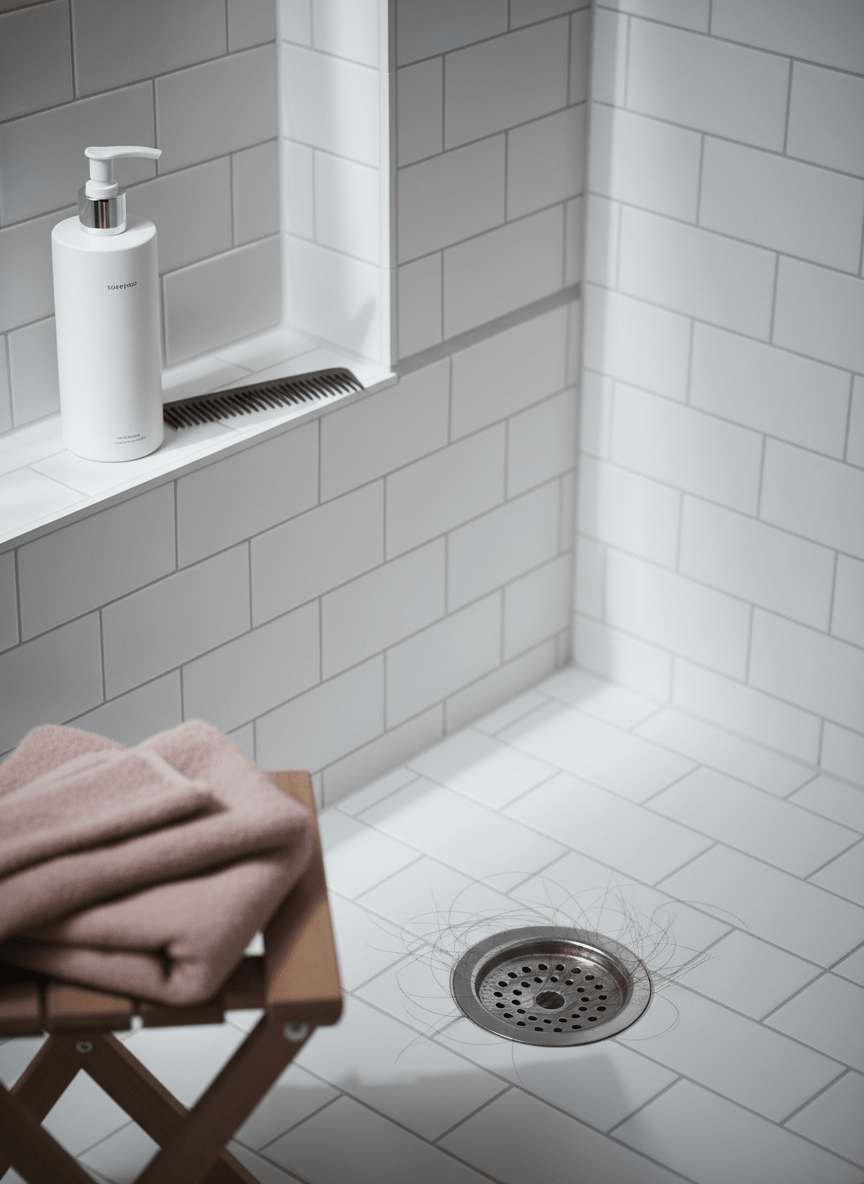
Seeing hair in the shower does not mean shampoo caused those hairs to start shedding.
Hair naturally cycles through growth, rest and shedding. The American Academy of Dermatology says losing roughly 50 to 100 hairs a day is normal, although the amount you actually notice varies from person to person.
When you shampoo and rinse, the movement can release hairs that were already in the shedding stage. The shower is often where you see the shedding. It is not necessarily where the shedding began.
Washing Less Can Make the Next Wash Look Worse
This can create a miserable little feedback loop:
- You see hair in the shower.
- You become afraid to wash.
- You wait longer.
- More naturally shed hairs stay caught among the remaining hair.
- Then you finally shampoo and see a larger collection come out at once.
Now shampoo looks guilty because that is when the hairs became visible.
Wash-test research actually uses shampooing and collection of shed hairs as one way to evaluate shedding patterns because washing provides a practical way to collect hairs that are already being released.
Shedding and Breakage Are Different Questions
Aggressive detangling, rough scrubbing, pulling, high heat and other mechanical stress can damage the hair fiber and contribute to breakage. So saying that washing does not create telogen shedding does not mean everything you do in the shower is harmless.
My preference is straightforward:
- Wash the scalp.
- Do not wad the lengths into a ball and scrub them like laundry.
- Rinse thoroughly.
- Condition the hair appropriately.
- Detangle with respect for the fiber you actually have.
For the technique itself, see How to Shampoo the Scalp Without Wrecking the Hair.
If You Are Shedding Heavily, Ask What Changed
Excessive shedding can follow illness, fever, surgery, childbirth, major stress, significant weight loss and other disruptions. The frustrating part is timing: the shedding may not become noticeable until a few months after the triggering event.
That is why I want to know what changed before the shedding changed.
If illness, surgery or major stress may be part of the timing, read Why Can Hair Start Shedding Months After Illness, Surgery or Stress?
If you are seeing a widening part, rapidly increasing scalp visibility, bald patches, persistent heavy shedding, significant itching or scaling, or another unusual scalp change, that deserves further evaluation.
Do Not Let Fear Make Scalp Care Worse
I am not a fan of stretching wash day simply because washing less has become a virtue online. Your scalp is skin. It produces oil. You sweat. Product accumulates. Skin cells shed. Dirt happens.
Clean it according to what it actually needs.
If seeing shed hair is upsetting, I understand why the instinct is to stop touching it. Avoiding appropriate cleansing still does not solve the mechanism responsible for excessive shedding.
You can keep the scalp clean and investigate abnormal shedding at the same time.
Next move: Read How Often Should You Shampoo Your Hair?, How to Shampoo the Scalp Without Wrecking the Hair, and Why Can Hair Start Shedding Months After Illness, Surgery or Stress?
Sources: American Academy of Dermatology hair-shedding guidance; Cleveland Clinic shower-shedding guidance; published refined wash-test research.

 Lisa Proctor