
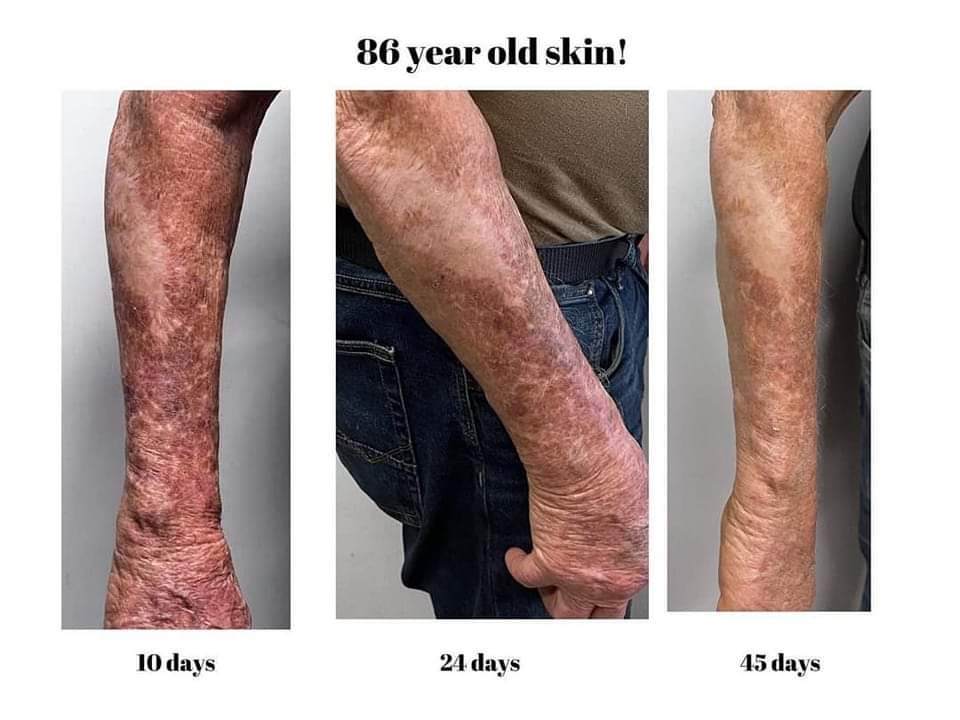
Skin changes with age. It may become drier, thinner-looking, less elastic or more crepey, and those visible changes can feel frustrating when your skin no longer behaves the way it once did.
Part of that change involves shifts in collagen and elastin, natural oil production, cumulative sun exposure and other normal age-related factors. But a visible change in the skin does not tell us what is happening in the brain, heart, gut, bones or other internal tissues, and it should not be used as proof of an internal health effect.
Start With the Basics
- Cleanse gently enough that the skin does not feel stripped or tight afterward.
- Use moisturizer consistently when dryness or rough texture is part of the problem.
- Protect exposed skin from excessive sun exposure and use appropriate sun protection.
- Pay attention to products or routines that repeatedly cause irritation rather than assuming more intensity is better.
- Give one reasonable adjustment enough time to observe what changes before stacking several new products at once.
Supplements and skincare products can be part of someone’s routine, but testimonials—even dramatic ones—cannot establish that a product repaired scar tissue, reversed damage or caused a specific internal benefit. That is why I now separate personal experience, product claims and actual evidence instead of letting one stand in for another.
If you’re interested in where inside-out collagen support fits—and what the evidence does and does not earn—I break that down in TrueScience Liquid Collagen: Inside-Out Support for Healthy-Looking Skin, Hair & Nails.
If a skin change is painful, bleeding, infected-looking, rapidly changing, not healing as expected or otherwise medically concerning, cosmetic care is not the right endpoint. That belongs with an appropriately qualified healthcare professional.
Next Useful Move
If your skin has changed and you are not sure whether dryness, irritation, exfoliation or routine overload deserves attention first, start with one pattern instead of replacing the whole shelf.
This article is general cosmetic and wellness education. It is not medical diagnosis or treatment advice.

 Lisa Proctor